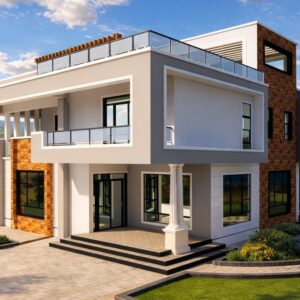
Discover the best farmhouse designs in Kenya — from modern and rural styles to affordable bungalow plans. Learn costs, materials, plot tips, and where to buy or download approved farmhouse plans for your dream build.
Introduction
Farmhouse designs in Kenya are becoming a top choice for homeowners seeking space, comfort, and a connection with nature. As urban life gets busier, many Kenyans are embracing farmhouse-style homes for their relaxed layouts, scenic surroundings, and affordability compared to city apartments.
A modern farmhouse in Kenya blends rural charm with contemporary finishes — wide verandas, pitched roofs, natural stone walls, and large windows that invite natural light. Whether you’re in Kiambu, Nakuru, or Machakos, these homes fit both rural and peri-urban lifestyles.
This guide helps buyers, builders, and investors understand why farmhouse designs are growing in popularity, what to expect in different styles, and how to start planning your own farmhouse project with confidence.
Why Choose a Farmhouse Design in Kenya
Lifestyle appeal: space, comfort & nature connection
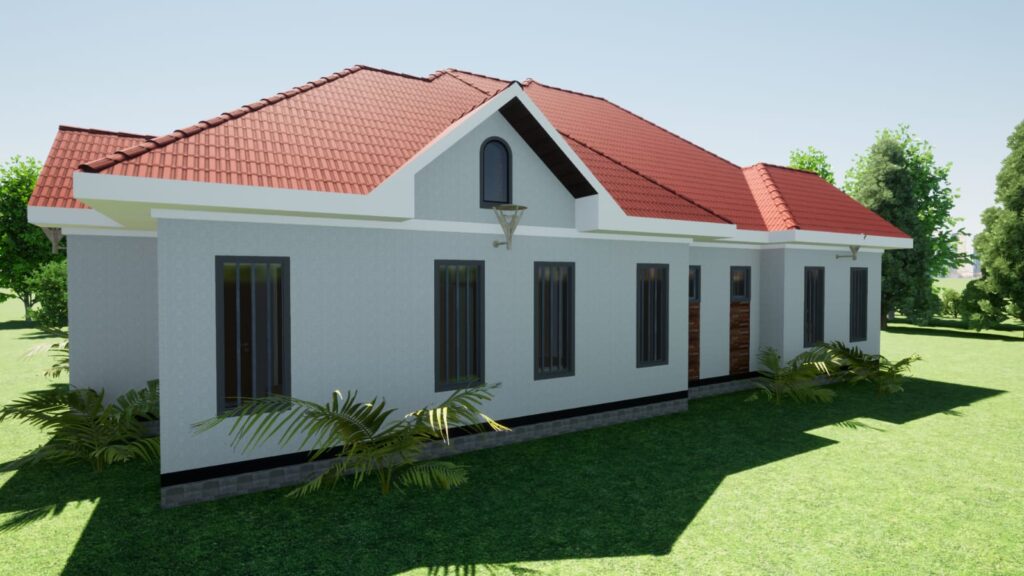
Farmhouse homes provide more living space and privacy than typical urban houses. The open floor plans, large verandas, and garden spaces create a peaceful setting ideal for families and retirees. These homes often include outdoor kitchens, lounges, and gardens that promote a slower, more refreshing lifestyle close to nature.
You can design them for self-sufficiency — solar power, borehole water, and kitchen gardens — making them sustainable and cost-efficient long-term.
[Related: Explore rural house designs in Kenya to compare plot requirements.]
Climate and cultural fit for rural and peri-urban plots
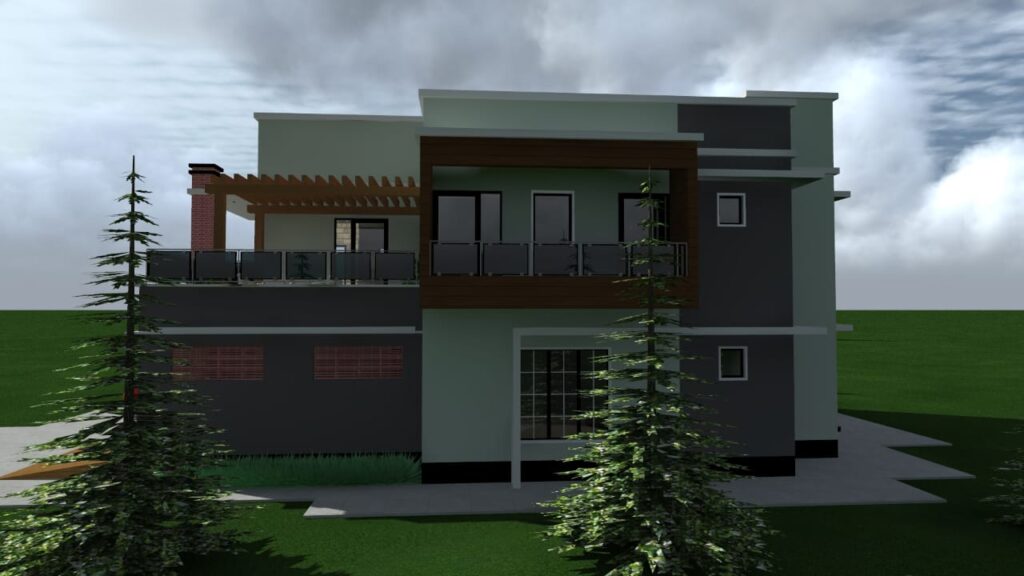
Farmhouse designs in Kenya are perfectly suited for the country’s diverse climate and terrain. Their high roofs and wide eaves provide natural cooling in hot areas, while stone and timber finishes keep interiors insulated.
Culturally, these homes fit Kenyan family living — they offer plenty of room for guests, outdoor gatherings, and even small farming. The flexibility of the layout allows easy expansion over time.
[Read next: Building cost guide in Kenya for accurate budgeting insights.]
Modern farmhouse trend in Nairobi outskirts & towns
Modern farmhouse house plans are increasingly common in areas like Kitengela, Juja, and Ngong. Young families are combining rustic architecture with modern touches — clean lines, large glass panels, and minimalist interiors.
These homes maintain the comfort of traditional farmhouses but add efficiency and style, appealing to middle-class buyers who want tranquility without leaving the city too far behind.
[Check out modern house designs in Kenya for inspiration on blending rustic and urban elements.]

Farmhouse as an investment (Airbnb, retreat, or retirement home)
Beyond being a family home, a farmhouse can be a smart investment. Many Kenyans are converting their rural farmhouses into Airbnbs, eco-lodges, or countryside retreats. With low operational costs and growing domestic tourism, the return on investment can be impressive.
Others choose farmhouse bungalow designs for retirement homes — peaceful, single-floor layouts that are affordable to build and maintain. The versatility of farmhouse designs makes them ideal for both living and income-generating purposes.
[See also: Holiday home investment opportunities in Kenya for related ideas.]
Types of Farmhouse Designs in Kenya
Modern farmhouse house plans
Modern farmhouse designs in Kenya combine contemporary architecture with rural warmth. These plans feature open layouts, large windows, and clean lines enhanced with glass, steel, and local stone finishes. Interiors often include neutral colors, open kitchens, and vaulted ceilings for a bright, airy feel.
They’re best suited for Nairobi, Kiambu, or Nakuru suburbs, where modern utilities blend easily with open landscapes. Homeowners enjoy the country aesthetic without sacrificing modern convenience or accessibility.
[Related: Explore modern house plans in Kenya for similar layouts and cost comparisons.]
Rural farmhouse Kenya
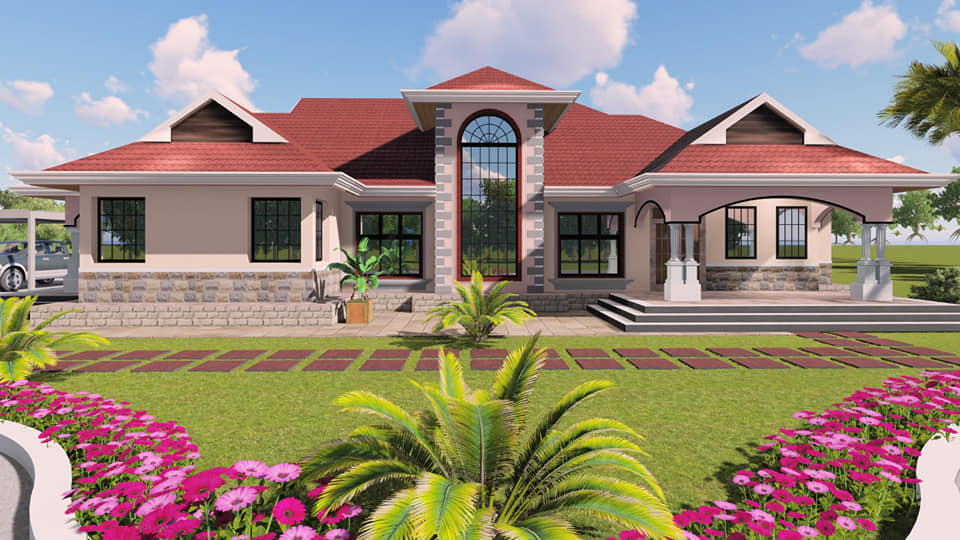
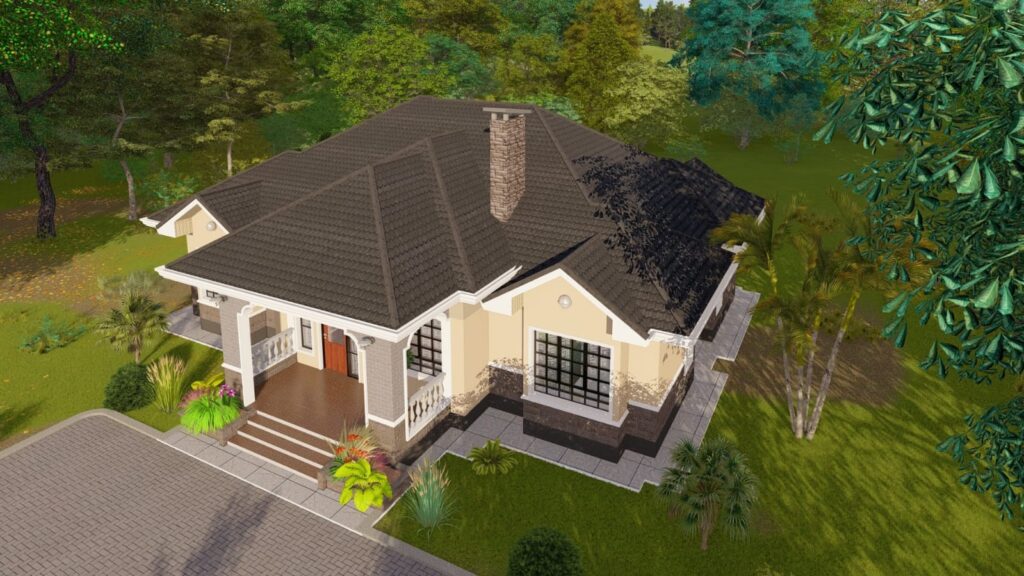
Traditional rural farmhouses in Kenya emphasise natural materials such as timber, stone, and clay tiles. Their wrap-around verandas, pitched roofs, and spacious outdoor areas create a homely and authentic rural feel.
These designs are ideal for larger countryside plots, allowing gardens, livestock areas, and kitchen spaces to coexist naturally. They’re perfect for regions like Nyeri, Nanyuki, and Eldoret, where cool climates and open land make rural farmhouse living comfortable.
[Read next: Learn how to choose affordable rural house plans in Kenya suited to your location.]
Farmhouse bungalow designs
Farmhouse bungalow designs in Kenya are practical and family-friendly. Built on a single floor, they’re easy to maintain, cost-efficient, and accessible for all age groups — especially retirees or families with young children.
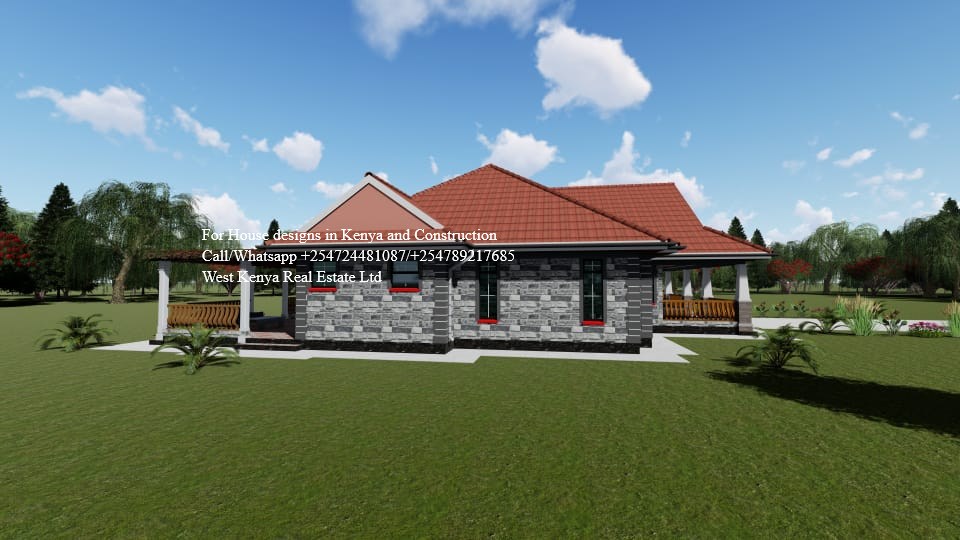
The layout typically includes three to four bedrooms, a central lounge, and wide verandas for outdoor living. These plans are also easier to construct in phases, making them a favorite among self-builders working with tight budgets.
[Also see: Bungalow house plans in Kenya for more one-storey home designs.]
Two-storey and hybrid farmhouse options
Two-storey or hybrid farmhouse designs blend modern aesthetics with traditional farmhouse form. The lower level often features communal areas, while the upper floor offers bedrooms with scenic views — ideal for hilly plots or areas overlooking farms or valleys.
These designs are increasingly popular in regions like Limuru and Tigoni, where sloping terrain makes elevation both practical and beautiful. They allow for better space utilisation without requiring a wide plot.
[Check out duplex and two-storey house designs in Kenya for alternative hybrid layouts.]
Key Design & Planning Considerations
Plot orientation, drainage, and soil type
Proper plot orientation is critical when designing a farmhouse in Kenya. Position your living spaces to face sunrise or sunset for natural lighting and airflow. Consider drainage flow and conduct a soil test to determine the foundation type needed for your area.
Sloped or clay-heavy plots may require extra reinforcement, while sandy soil allows better drainage but needs stability planning.
[Related guide: Plot preparation tips before building in Kenya.]
Local materials and finishes (mawe, timber, mabati, cement board)
Using locally sourced materials like mawe stone, timber beams, mabati roofing, and cement board reduces costs while supporting local artisans. These finishes also ensure durability and blend well with the environment.
Natural stone cladding gives a rustic charm, while timber detailing adds warmth to modern designs — ideal for creating that authentic farmhouse look.
[Also read: Wall cladding materials in Kenya to explore aesthetic and cost options.]
Water & power setup for rural builds (borehole, solar, septic)
Rural farmhouses often operate off-grid, making independent utilities essential. Install a borehole or well for water, solar panels for power, and a septic system for waste management.
Planning these systems early avoids costly retrofits and ensures your home runs efficiently even in areas without county services.
[Learn more: Off-grid home setup in Kenya — solar, water, and waste systems.]
Veranda placement, ventilation, and daylight flow
A signature feature of any farmhouse design in Kenya is the veranda. Place it strategically to provide shade and cross-ventilation while enhancing outdoor living.
Ample window openings and clerestory lighting help maintain cool interiors, especially in warm regions. Combining good airflow with natural light lowers energy costs and boosts comfort year-round.
[Explore passive cooling design ideas for Kenyan homes to increase efficiency.]
Space zoning: kitchen gardens, animal sheds, and outdoor kitchens
Kenyan farmhouses benefit from smart space zoning. Plan kitchen gardens close to the main kitchen for easy access, position animal sheds downwind, and create sheltered outdoor kitchens for cooking or entertaining.
Proper zoning improves hygiene, convenience, and farm-to-table living — a growing trend in Kenyan countryside homes.
[Related: Homestead layout ideas for rural Kenya for better space planning.]
Sample Farmhouse Plans (Kenyan Examples)
3-bedroom modern farmhouse (approx. 180–220m²)
This plan includes an open living area, ensuite master bedroom, and a wide veranda that wraps around the lounge. Ideal for small families or first-time builders seeking simplicity and style.
Its footprint fits well on quarter-acre plots and offers flexibility for phased construction.
[Download sample: 3-bedroom farmhouse house plan Kenya.]
4-bedroom rural farmhouse with DSQ
Designed for larger families, this plan features four bedrooms, a spacious veranda, and a detached servant’s quarter. The rustic finishes—stone walls, timber beams, and gable roofing—reflect a true countryside atmosphere.
It’s ideal for two-acre or larger plots in cool highland regions.
[Explore: 4-bedroom house plans in Kenya for similar family layouts.]
2-bedroom farmhouse bungalow for retirees
This simple yet elegant design caters to retirees seeking peace and easy living. The single-floor layout offers large windows, a central lounge, and access ramps if needed.
Its affordability and low maintenance make it one of the most popular farmhouse bungalow designs in Kenya.
[Check: Affordable retirement house plans in Kenya for more ideas.]
Custom farmhouse options (how to request plan adjustments)
Most Kenyan architects and plan providers offer customisation services. You can adjust room sizes, roofing style, finishes, or even add features like an outdoor lounge or garage.
Customising ensures your home fits your plot, climate, and lifestyle perfectly — a worthwhile investment for comfort and value.
[Visit: Trusted Kenyan farmhouse plan providers to order or customise your design.]
Building & Approval Process in Kenya
Steps from design selection to NCA approval
Building a farmhouse in Kenya begins with selecting a design that suits your plot and budget. Once you’ve chosen or customised your plan, submit it to a registered architect or structural engineer for stamping.
Next, take the approved drawings to your county’s planning department for review, then register your contractor with the National Construction Authority (NCA). Construction can only begin after you receive both the county building permit and NCA registration.
[Related: Building approval process in Kenya — full checklist and forms.]
County-specific approvals (Kiambu, Kajiado, Nakuru, etc.)
Each county in Kenya has unique approval timelines and requirements. For instance, Kiambu and Nairobi may require environmental assessments for larger builds, while Kajiado and Nakuru often request land-use proof and survey maps.
Understanding your county’s checklist early helps you avoid costly back-and-forth delays. Some counties also allow online submissions for faster processing.
[See: County approval requirements in Kenya for step-by-step guidance.]
Common approval delays & how to avoid them
Approval delays usually happen due to incomplete documentation, unpaid fees, or unlicensed consultants. Always ensure your drawings are signed by qualified professionals and fees are paid in full.
Follow up regularly with county officials, and keep copies of every submission. Hiring a local architect familiar with your county’s process can also speed things up.
[Learn more: How to fast-track building approvals in Kenya.]
Engaging local architects, contractors & fundis safely
Work only with registered architects, engineers, and contractors to protect yourself legally and financially. Always sign written agreements covering scope, timelines, and payments.
Check for NCA registration, and don’t rely solely on verbal promises. It’s also wise to visit previous projects before hiring to assess workmanship quality.
[Check: Directory of registered NCA contractors and architects in Kenya.]
Cost Breakdown: Farmhouse Construction in Kenya (2025 Guide)
Typical design cost range (KSh 20,000–80,000)
Most Kenyan farmhouse plans cost between KSh 20,000 and KSh 80,000 depending on size, detail, and provider. Customised plans cost more but ensure perfect alignment with your plot and preferences.
It’s best to budget for additional architectural or structural consultations if you want unique finishes or adjustments.
[See also: House plan pricing in Kenya for 2025 estimates.]
Estimated build cost per m² (modern vs rural styles)
Modern farmhouse styles average KSh 45,000–65,000 per m² due to high-end finishes like glass and steel, while rural or bungalow designs can cost as low as KSh 35,000 per m² using local materials.
Costs vary by region, accessibility, and terrain — areas like Kajiado or Nakuru tend to be cheaper to build than Nairobi suburbs.
[Read more: Construction cost per square metre in Kenya.]
Hidden costs: site prep, fencing, borehole, landscaping
Many homeowners underestimate hidden costs. Clearing land, leveling, fencing, and installing boreholes can add 10–20% to total expenses. Landscaping and driveways also need to be factored in before completion.
Plan for these early to avoid budget shocks once construction starts.
[Also check: Plot preparation and landscaping costs in Kenya.]
Financing options: SACCO, self-build, mortgage routes
Financing your farmhouse can be done through SACCO loans, self-build savings, or mortgages. SACCOs offer flexible repayment terms, while some banks now provide rural construction loans.
If you build in phases, ensure each stage has funding ready to prevent costly delays.
[Explore: Affordable construction loan options in Kenya.]
Saving tips: phased construction & sourcing materials locally
To reduce costs, build in stages — foundation, structure, roofing, and finishes — allowing you to spread expenses. Use locally made materials like interlocking blocks or natural stone instead of imports.
Buying directly from suppliers and involving experienced fundis ensures both quality and savings.
[Guide: Cost-saving building tips for Kenyan homeowners.]
Where to Get Farmhouse House Plans in Kenya
Trusted Kenyan plan providers (Afrohouseplans, Aspax, Maramani)
Several trusted providers offer farmhouse house plans in Kenya. Sites like Afrohouseplans, Aspax House Plans, and Maramani allow you to browse designs and purchase ready-to-build plans instantly.
These platforms also provide optional architectural support for approvals and minor adjustments.
[Visit: Afrohouseplans Kenya, Aspax House Plans, and Maramani to browse farmhouse plans.]
What to check before buying downloadable plans (licensing, engineer stamp)
Before purchasing, verify that each plan is approved by a registered architect or structural engineer. Look for the engineer’s stamp and licensing details to ensure the design complies with Kenyan building codes.
Avoid generic foreign templates that may not suit local conditions like climate, soil type, or materials.
[See: How to verify licensed architects in Kenya through BORAQS.]
Custom vs pre-designed plans — which is right for your budget
Pre-designed plans are cheaper and faster to obtain, ideal for standard plots. Custom plans, on the other hand, let you tweak layouts, finishes, and sizes for a more personal touch.
Choose based on your plot type, lifestyle needs, and construction budget.
[Compare: Custom vs ready-made house plans in Kenya.]
Avoiding online scams and unapproved draftsmen
Beware of online sellers offering cheap, unapproved plans. Always confirm credentials, request sample documents, and check client reviews.
If the plan price seems too low to be true, it probably is. Working with registered architects ensures safety, legality, and proper documentation.
[Read: How to spot fake house plan websites in Kenya.]
Interior & Exterior Inspiration
Modern farmhouse interiors (neutral tones, wood, minimalism)
Modern farmhouse interiors in Kenya emphasise simplicity and comfort. Use neutral colors like white, beige, and grey, combined with wooden accents and textured finishes.
Add indoor plants, woven furniture, and pendant lighting to achieve a cozy, minimalist charm.
[Explore: Interior design trends for modern homes in Kenya.]
Outdoor landscaping ideas for Kenyan farmhouses
A beautiful outdoor space enhances farmhouse appeal. Add native trees, flower gardens, and stone walkways to complement natural surroundings.
Pergolas, outdoor lounges, and fire pits create relaxing spots for family gatherings and evening rest.
[Check out: Landscaping ideas for rural Kenyan homes.]
Eco and smart-home upgrades (solar, rainwater reuse, sensors)
Eco-upgrades such as solar panels, rainwater harvesting, and smart sensors reduce bills and environmental impact. Install motion lights, smart thermostats, and low-flow taps to make your home efficient and sustainable.
These upgrades align perfectly with Kenya’s growing focus on green living.
[Read: Sustainable building technologies in Kenya.]
Action Plan: From Idea to Completed Farmhouse
Step 1: Define plot, budget & desired size
Start by identifying your plot size and location. Set a realistic budget and decide how many bedrooms or features you want. Knowing your goals early prevents costly design changes later.
[Guide: How to plan a building budget in Kenya.]
Step 2: Choose or modify your plan
Pick a pre-designed farmhouse plan or request customisation from a trusted provider. Ensure the plan fits your plot shape and county building codes.
Discuss material options with your architect to match both cost and design.
[Also see: Choosing the right house plan for your plot in Kenya.]
Step 3: Approvals & mobilisation
Submit your drawings to the county for approval, pay required fees, and get NCA registration. Once approved, prepare your site by fencing, clearing, and marking boundaries.
Mobilise your fundis and purchase essential materials for the first construction phase.
[Related: Building approval checklist for Kenyan homeowners.]
Step 4: Build phase & site supervision
Construction should follow approved drawings strictly. Supervise regularly or hire a site manager to monitor quality, materials, and timelines.
Keep a clear payment schedule and record every stage to ensure accountability.
[Check: Construction supervision tips for Kenyan projects.]
Step 5: Finishing, furnishing & occupancy
After structure completion, focus on finishes — painting, flooring, lighting, and landscaping. Use local artisans to maintain authenticity and save costs.
Once complete, obtain the occupation certificate from your county before moving in.
[Final step: Post-construction checklist for new Kenyan homeowners.]
Conclusion
Farmhouse designs in Kenya offer the perfect balance between comfort, nature, and practicality. Whether you choose a modern glass-and-steel farmhouse in Kiambu or a rustic stone bungalow in Nakuru, each style brings warmth, open spaces, and long-term value.
Remember, the key is to balance dream aesthetics with local practicality — design for your soil, climate, and budget. Use registered architects, reliable contractors, and locally available materials to achieve both beauty and durability.
Ready to begin your journey? [Browse trusted farmhouse plans in Kenya] or [Get a customised quote today] to start building your dream countryside home.