
Table of Contents
For many Kenyans living abroad, building a home in Kenya is more than a construction project. It is a long-term investment, a connection to home and, in many cases, a plan for the future.
But building a house in Kenya while living in the United States, United Kingdom, Australia, Germany or Canada comes with a unique challenge: you are making decisions about a project you cannot physically see every day.
Who is checking the site?
Who is confirming that the materials delivered are the ones you paid for?
Who is monitoring workmanship?
How do you know the project is progressing according to the agreed programme?
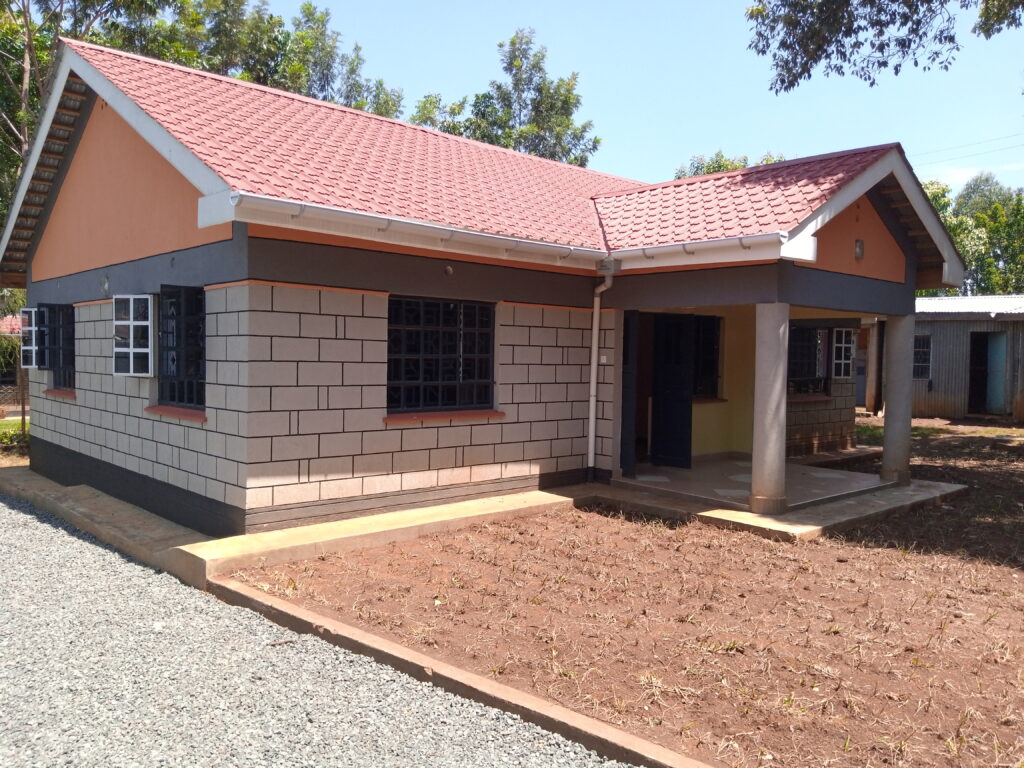
Building a House in Kenya
And perhaps the biggest question of all: How do you maintain control of your construction project when you are thousands of kilometres away?
At West Kenya Real Estate Ltd, we have worked on more than 10 construction projects for clients living in the diaspora. These clients have come from countries including the USA, UK, Germany, Australia and Canada.
Our experience has taught us that successful diaspora construction does not depend simply on finding a trustworthy contractor. Trust is important, but a good project needs a system of communication, documentation, verification, financial control and accountability.
In this article, we share lessons from four of our diaspora projects in Kikuyu, Kakamega, Ruiru, and Nakuru, and explain what we believe diaspora clients should consider before building a house in Kenya from abroad.
Why Building a House in Kenya From Abroad Can Be Challenging
A client living in Kenya can, if necessary, drive to the construction site, inspect the work, speak to the foreman, visit a hardware shop, meet the architect or engineer and make decisions in person.
A diaspora client does not have that luxury.
Even when a client visits Kenya occasionally, construction continues when they are back overseas.
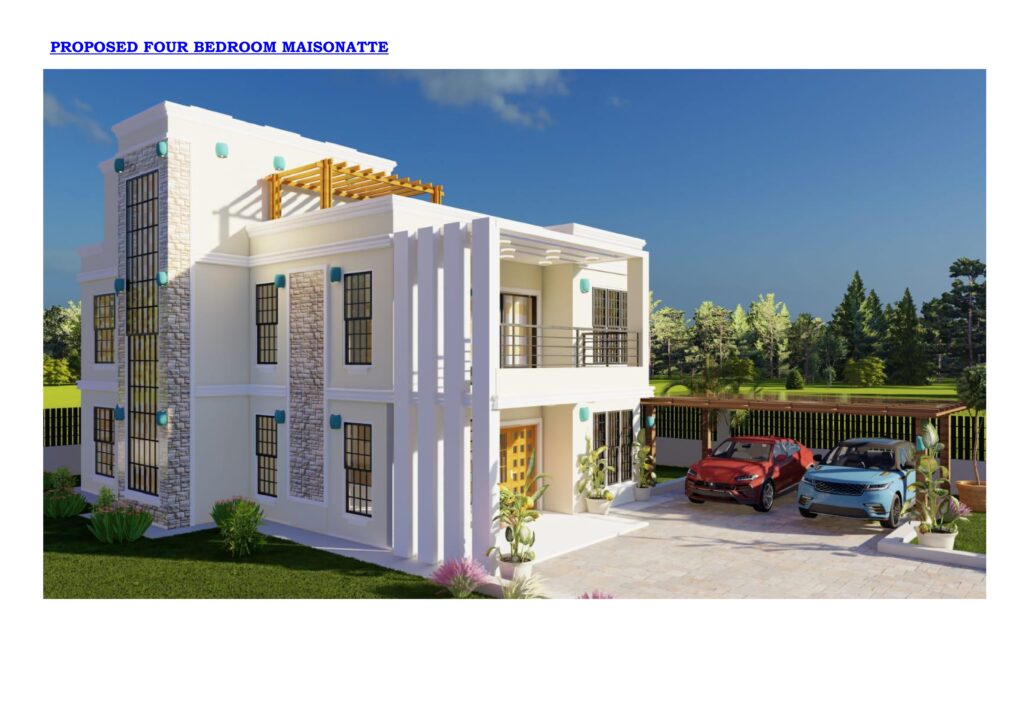
Building a House in Kenya From the Diaspora-PR019
This creates several potential challenges.
1. You cannot physically supervise the site
Construction involves hundreds of decisions and activities. Workmanship, materials, measurements, finishes and site conditions can change quickly.
If the client is abroad, they need reliable people and systems on the ground to ensure the project remains on course.
2. You need reliable communication
A client cannot make informed decisions if information reaches them late or without sufficient detail.
For example, telling a client that “the foundation is progressing well” is not the same as showing them photographs or videos and explaining exactly what has been completed.
3. You need financial accountability
Construction involves significant amounts of money. Diaspora clients therefore need a clear understanding of:
- What work has been completed
- What materials are required
- How much each stage costs
- What has already been paid
- What remains outstanding
- When the next payment is required.
4. You need independent verification
A relative or friend may be physically close to the project, but that does not necessarily mean they understand construction.
Someone can be excellent at checking whether workers are present without necessarily being able to determine whether the work meets the required technical standards.
This distinction is important.
Physical presence and technical supervision are not necessarily the same thing.
Lesson 1: A Local Representative Can Help—But Should Not Carry the Entire Project
One of the most useful lessons from our diaspora projects came from a house we built in Kikuyu, Kiambu County, for a client based in Texas.
The client’s wife was in Kenya, while a cousin acted as a local representative.
At first glance, this might appear to be the ideal arrangement.
The client had family members locally who could physically interact with the project.
But there was an important principle behind the success of the project: the local representative was part of a wider project-management and communication system.
The client did not simply hand the project over to the cousin and wait until the house was complete.
Instead, we established a WhatsApp communication group involving the key people connected to the project.
This included the client, the client’s spouse, the local representative, the contractor/foreman and the relevant project team.
This created a common communication channel where information could be shared, questions could be answered and decisions could be made.
The client could remain involved despite being in Texas.
Lesson 2: Use Technology to Make the Client Feel Present
One of the simplest but most powerful tools we have used on diaspora projects is something most people already have on their phones:
WhatsApp.
Technology cannot replace physical site supervision, but it can significantly reduce the information gap between a client overseas and a construction site in Kenya.
On the Kikuyu project, progress was regularly communicated using photographs and videos.
But the important thing was not simply sending pictures.
The project team explained what the client was seeing.
For example, instead of sending a photograph without context, the client could receive an update explaining:
- What stage of construction had been completed
- What was currently being done
- What materials were required
- What decisions needed to be made
- What the next stage would involve.
This creates a much more transparent relationship.
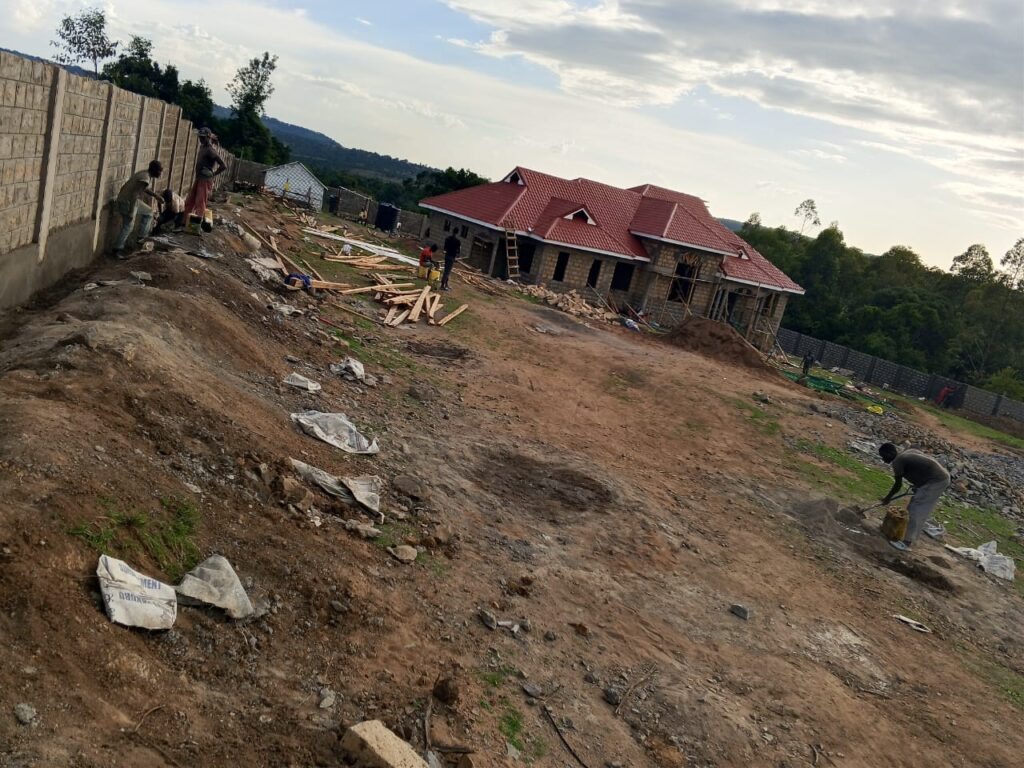
The same principle was used in our Kakamega project for a client living in Brisbane, Australia.
Because the client did not have a dedicated local representative, communication became even more important.
The client, spouse, Nairobi-based sister and our project team communicated through WhatsApp.
Live video communication was also used to demonstrate progress on site.
This meant the client did not have to rely entirely on someone else’s description of what was happening.
They could participate remotely.
Lesson 3: You Do Not Necessarily Need a Relative to Manage Your Construction Project
The Kakamega project taught us another important lesson.
A diaspora client can successfully build in Kenya without having a relative permanently stationed at the construction site.
The project was completed in approximately six months and included a bungalow, detached servant’s quarter, gazebo and perimeter wall.
There was no dedicated family member physically supervising the project every day.
Instead, the project relied on structured communication, documented progress, phased implementation and verification.
This is important because many diaspora clients assume that the only way to protect their investment is to give the project to a brother, sister, parent, cousin or friend.
Family involvement can certainly be useful.
But the question should not simply be:
“Who do I trust?”
The better question is:
“What system will ensure that everyone involved remains accountable?”
A trusted relative can still benefit from having professional contractors, consultants and project managers around them.
Similarly, a contractor should not expect a family member to make technical decisions simply because they happen to live nearby.
Lesson 4: Break the Project Into Manageable Phases
The Kakamega project also demonstrated the value of a phased construction approach.
Instead of viewing construction as one enormous financial commitment, the project was divided into stages.
This can make a diaspora construction project easier to manage financially and operationally.
A typical construction project might progress through stages such as:
- Site preparation
- Foundation
- Walling
- Roofing
- Plastering and finishes
- Electrical and plumbing installations
- Flooring and ceilings
- Painting
- External works
- Final completion.
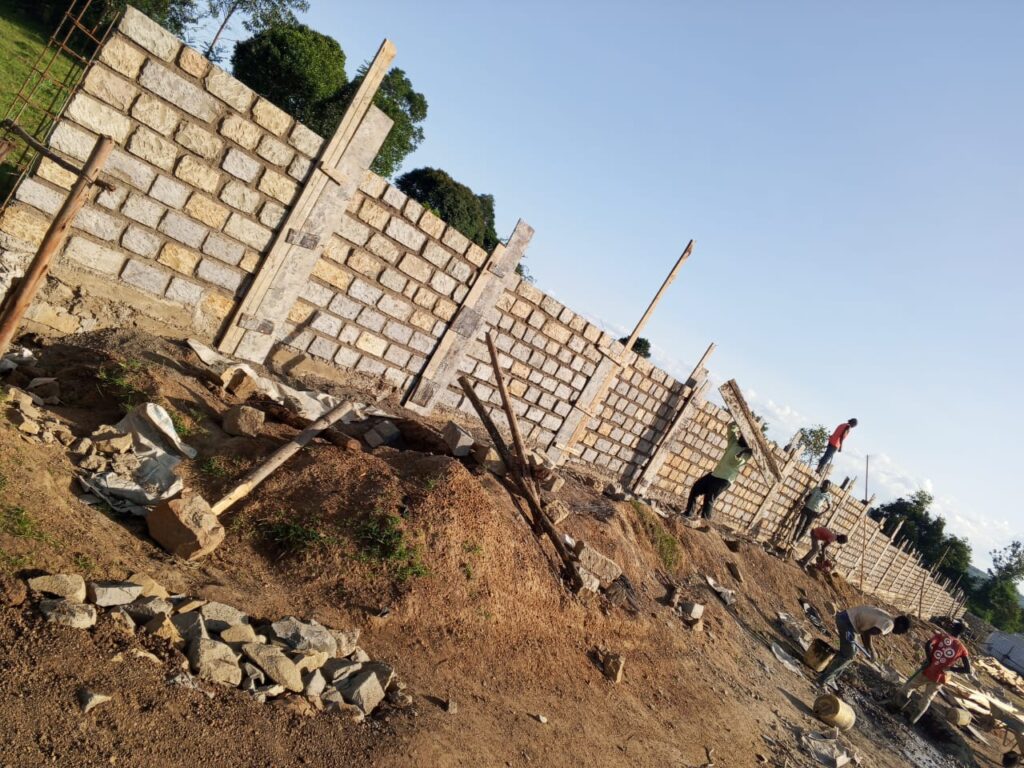
The exact stages will vary depending on the design and scope of the project.
The important principle is that payments and progress should be connected.
When a defined stage is completed, it can be inspected and documented before the project moves to the next stage.
This gives the client greater visibility over how money is being converted into physical progress.
Lesson 5: Progressive Payments Can Give Diaspora Clients Greater Control
One concern we hear frequently from diaspora clients is:
“How do I know the money I send is actually being used for my project?”
There is no single payment system that is suitable for every project. However, our experience has shown that clients are generally more comfortable when financial commitments are linked to clearly defined project stages.
On the Kakamega project, funds were released progressively according to completed phases.
This created a relationship between:
work completed → verification → payment → next stage.
Or
Payment→ work completed→ verification→ next stage
This is fundamentally different from giving an uncontrolled amount of money at the beginning and hoping everything proceeds according to plan.
For a diaspora client, the payment structure should be discussed before construction begins.
The client should understand:
- The total project scope
- The estimated cost
- What is included
- What is excluded
- The payment schedule
- The stage at which payments become due
- How variations will be handled
- How additional work will be approved
Clear financial procedures reduce misunderstandings later.
Lesson 6: Your Contractor Should Be Comfortable With Independent Verification
Another important lesson came from our Ruiru project in Kiambu County.
The client was based in Berlin, Germany and had an engineer locally.
Rather than viewing the engineer as a problem or competitor, we worked alongside the client’s independent engineer.
This arrangement created another layer of confidence for the client.
The engineer could provide technical oversight while our team handled the construction responsibilities.
Communication was maintained through a common WhatsApp group.
Materials were discussed and agreed upon collaboratively, while progress was documented through explanatory videos.
For us, this experience reinforced an important principle:
A professional contractor should not be afraid of reasonable accountability.
In fact, independent verification can benefit everyone.
The client gets additional confidence.
The contractor has a clear technical reference point.
And misunderstandings about workmanship or specifications can be identified earlier rather than after completion.
Lesson 7: Documentation Is More Important When the Client Is Abroad
When you are physically present at a construction site, you can see what is happening with your own eyes.
When you are in another country, documentation becomes much more important.
That means maintaining a clear record of project progress.
This can include:
- Site photographs
- Progress videos
- Material updates
- Construction-stage reports
- Approved drawings
- Payment records
- Variations
- Key decisions
- Inspection reports.
The purpose is not to create unnecessary paperwork.
The purpose is to create visibility and accountability.
A good progress update should answer three basic questions:
What has been done?
The client should understand what has been completed since the previous update.
What is happening now?
The client should know what workers are currently doing.
What happens next?
The client should understand the next stage and whether any decisions or payments are required.
This simple framework can make remote construction management much easier.
Lesson 8: Agree on Materials Before They Are Purchased
Material selection is another area where diaspora clients need to be involved.
A client living overseas may have specific expectations about:
- Tiles
- Sanitary fittings
- Doors
- Windows
- Roofing
- Kitchen finishes
- Electrical fittings
- Paint
- Plumbing fixtures.
Problems can arise when the contractor purchases materials without clearly agreeing on specifications.
For this reason, material decisions should ideally be made before procurement.
In our projects, communication platforms such as WhatsApp have made this much easier.
The client can be shown available options, specifications can be discussed, and decisions can be recorded.
This reduces the possibility of a client returning to Kenya and discovering that the house has been finished with materials they did not expect.
Lesson 9: A Common Communication Channel Prevents Confusion
One of the strongest lessons from our projects is the value of having one common communication channel for key project stakeholders.
Imagine a project where:
- The contractor speaks to the client’s brother.
- The client’s brother speaks to the client.
- The client speaks to the architect.
- The architect speaks to the contractor.
- The engineer sends information separately.
- The foreman communicates through another person.
Information can easily become distorted.
A common communication group creates a shared record.
For appropriate projects, this can include:
- Client
- Spouse
- Local representative
- Architect
- Engineer
- Contractor
- Project manager
- Relevant consultants.
Everyone can see the same decisions.
This is particularly valuable when the client is overseas because they are not physically available to clarify misunderstandings at the site.
Lesson 10: Choose a Contractor Who Understands Diaspora Clients
Building for a diaspora client requires more than construction skills.
The contractor also needs to understand remote-client management.
A contractor may be technically competent but still be difficult for a diaspora client to work with if they:
- Do not provide regular updates
- Avoid video calls
- Cannot explain expenditure
- Resist inspections
- Make decisions without approval
- Provide poor documentation
- Do not communicate changes promptly.
Before engaging a contractor, diaspora clients should therefore ask:
How will you keep me updated while I am abroad?
How often will I receive progress reports?
Can I participate in site meetings remotely?
How will payments be linked to construction progress?
Can my independent engineer inspect the work?
How will variations be approved?
How will material purchases be documented?
The answers can tell you a great deal about how the contractor operates.
What Our 10+ Diaspora Projects Have Taught Us
After working with diaspora clients from different parts of the world, we have learned that there is no single formula for every project.
Some clients have spouses or relatives in Kenya.
Some have independent engineers.
Some have no one locally.
Some visit Kenya several times during construction.
Others may only visit once or twice.
Yet successful projects tend to share several characteristics.
1. Trust is supported by systems
You should trust the people managing your project.
But trust should not eliminate accountability.
The best projects combine trust with documentation, communication and verification.
2. Communication should be continuous
Do not wait until the client returns to Kenya before explaining what has happened.
Regular communication allows problems to be identified early.
3. The client should remain involved
Being abroad does not mean you have to surrender all decision-making.
Technology makes it possible to participate in many project decisions remotely.
4. Construction should have clearly defined stages
Breaking the project into phases makes progress easier to understand and payments easier to manage.
5. Independent oversight can be valuable
An independent engineer or other qualified professional can provide additional assurance where the client wants an extra layer of oversight.
6. Decisions should be documented
Important decisions about materials, finishes, costs and variations should not depend entirely on verbal conversations.
7. The system should not depend on one person
If the entire project depends on one relative, one foreman or one contractor, the client may become vulnerable if that individual becomes unavailable.
A properly structured project has several layers of accountability.
A Practical Checklist for Kenyans in the Diaspora Planning to Build
Before you start construction in Kenya, consider the following checklist.
Before construction
- Have a clear architectural design. (Click to view designs)
- Establish the project scope.
- Develop a realistic budget.
- Understand the expected construction timeline.
- Agree on the specifications and finishes.
- Select qualified professionals and contractors.
- Establish the communication structure.
- Agree on the payment schedule.
- Define how variations will be handled.
- Determine who will provide independent oversight.
During construction
- Receive regular progress updates.
- Review photographs and videos.
- Participate in important decisions remotely.
- Track payments against completed work.
- Confirm major material selections.
- Document variations and approvals.
- Conduct physical inspections where possible.
- Maintain communication between the client and project team.
Before completion
- Conduct a final inspection.
- Prepare a defects or snagging list.
- Confirm that outstanding works are completed.
- Verify installations and finishes.
- Obtain relevant project documentation.
- Confirm handover arrangements.
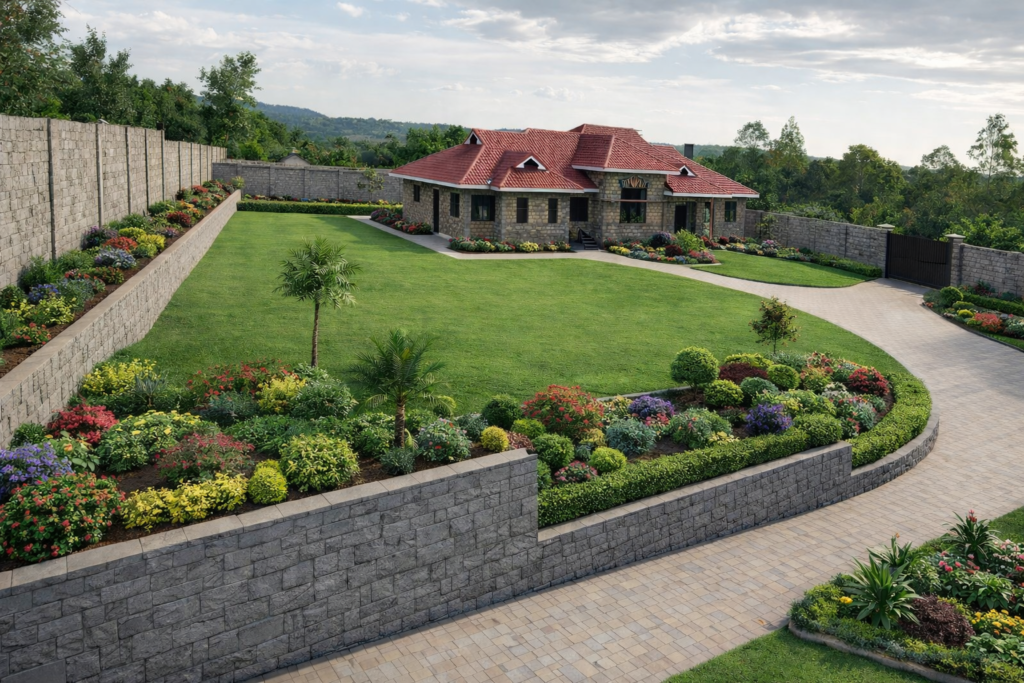
So, Can You Successfully Build a House in Kenya While Living Abroad?
Yes.
Our experience with more than 10 diaspora projects has shown us that being physically absent from Kenya does not have to prevent you from successfully building your home.
The key is to replace physical presence with a strong project-management system.
Our Kikuyu project showed how a local family representative can work effectively alongside a professional project team and a connected communication system.
Our Kakamega project demonstrated that a client can successfully build without a dedicated local representative by using structured communication, remote video updates, phased construction and progressive payments.
Our Ruiru project demonstrated the value of working alongside a client’s independent engineer to provide additional technical oversight.
These projects were different, but they all reinforced the same principle:
Successful diaspora construction is built on visibility, communication, accountability and trust.
The objective should not be to make the client feel that they have to be physically present every day.
The objective should be to create a system through which the client can remain informed, involved and confident, even when they are thousands of kilometres from the construction site.
Building Your Kenyan Home From Abroad With Confidence
For a Kenyan living abroad, building a home back in Kenya can feel overwhelming.
You may have heard stories of projects that took years longer than expected, budgets that increased unexpectedly, materials that did not match expectations or relatives who became overwhelmed with managing construction.
But those experiences should not discourage you from investing in a home in Kenya.
Instead, they should encourage you to approach construction differently.
Start with a good design.
Develop a realistic budget.
Choose your construction team carefully.
Define responsibilities.
Create a clear communication system.
Document progress.
Use independent verification where appropriate.
Link payments to clearly defined stages.
And most importantly, do not allow distance to mean that you lose visibility over your project.
At West Kenya Real Estate Ltd, we have worked with diaspora clients in the USA, UK, Germany, Australia, Canada and other countries, helping them turn construction plans in Kenya into completed homes.
Our experience has taught us that the question is not simply whether you can build a house in Kenya while living abroad.
The better question is:
What system can we put in place to make sure you remain in control of your project, even when you are not physically here?
That is the approach we bring to diaspora construction projects: combining professional design and construction with communication, transparency, project management and accountability.
If you are living abroad and planning to build a home in Kenya, the first step does not have to be sending money or travelling home.
It can simply be a conversation about your idea, your location, your house design, your budget and how the project can be managed from where you are.
Your distance from Kenya should not be a barrier to building the home you have always wanted. With the right people and the right systems, you can build from abroad with confidence.
Looking to build a house in Kenya?
Talk to West Kenya Real Estate Ltd on +254724481087 or +254789217685 or email info@westkenyarealestate.com.